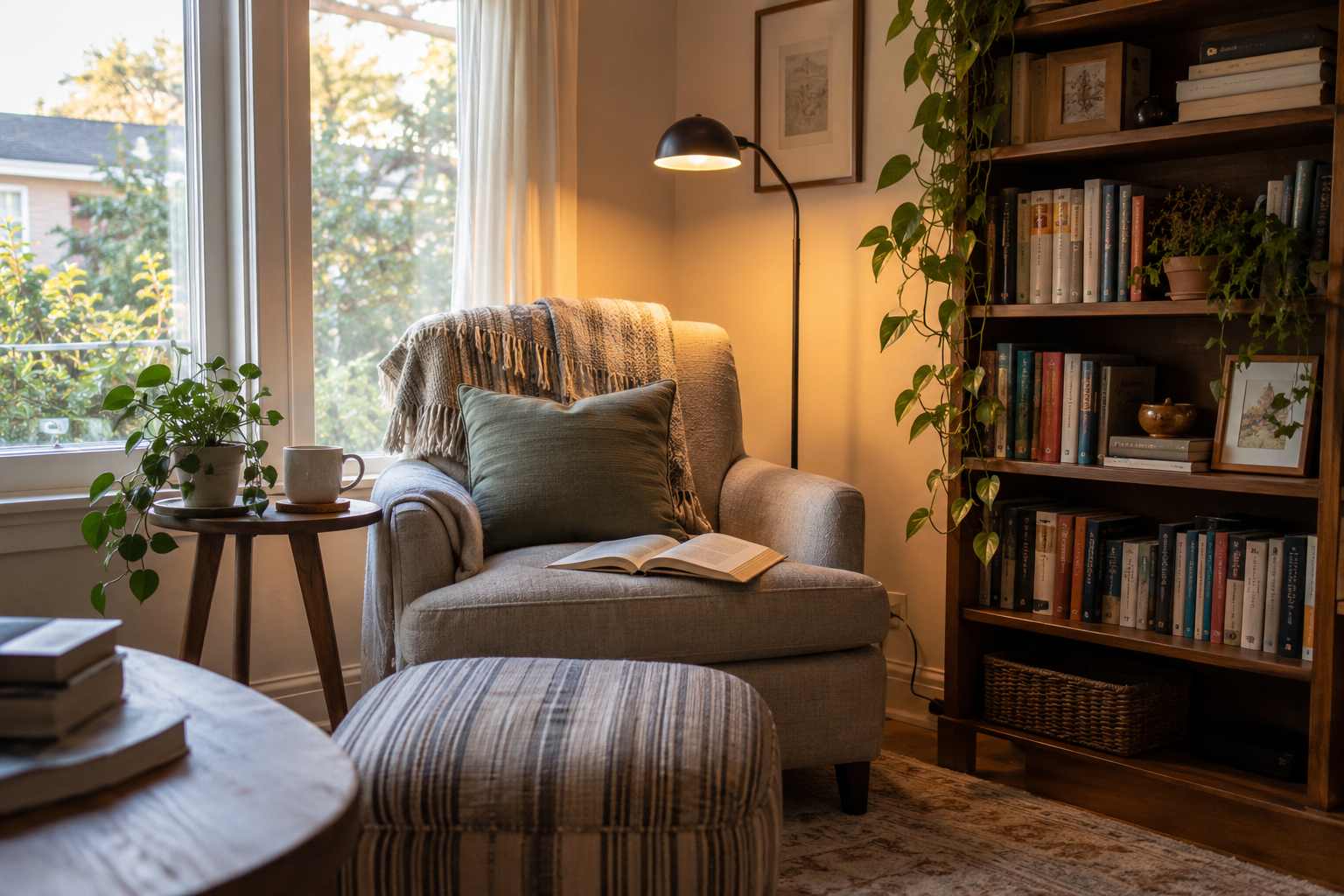

A chair beside a window, a small shelf of books and a lamp that actually lets you read after dark. You do not need an entire room to create a comfortable place for reading.
In fact, some of the nicest reading spots are found in ordinary corners of a bedroom, at the end of a hallway or beside a living room bookshelf. The furniture does not need to match, and there is no reason to spend hundreds of dollars on a designer armchair.
What counts is how the space works when you sit down with a book. Can you rest your back comfortably? Is there enough light to read small print? Can you reach your coffee without getting up? A few thoughtful choices can turn an unused corner into a place you enjoy spending an entire afternoon.
You do not need an entire room to create a comfortable place for reading, especially if you are trying to read more books regularly.
Find a Spot Where You Will Actually Want to Read
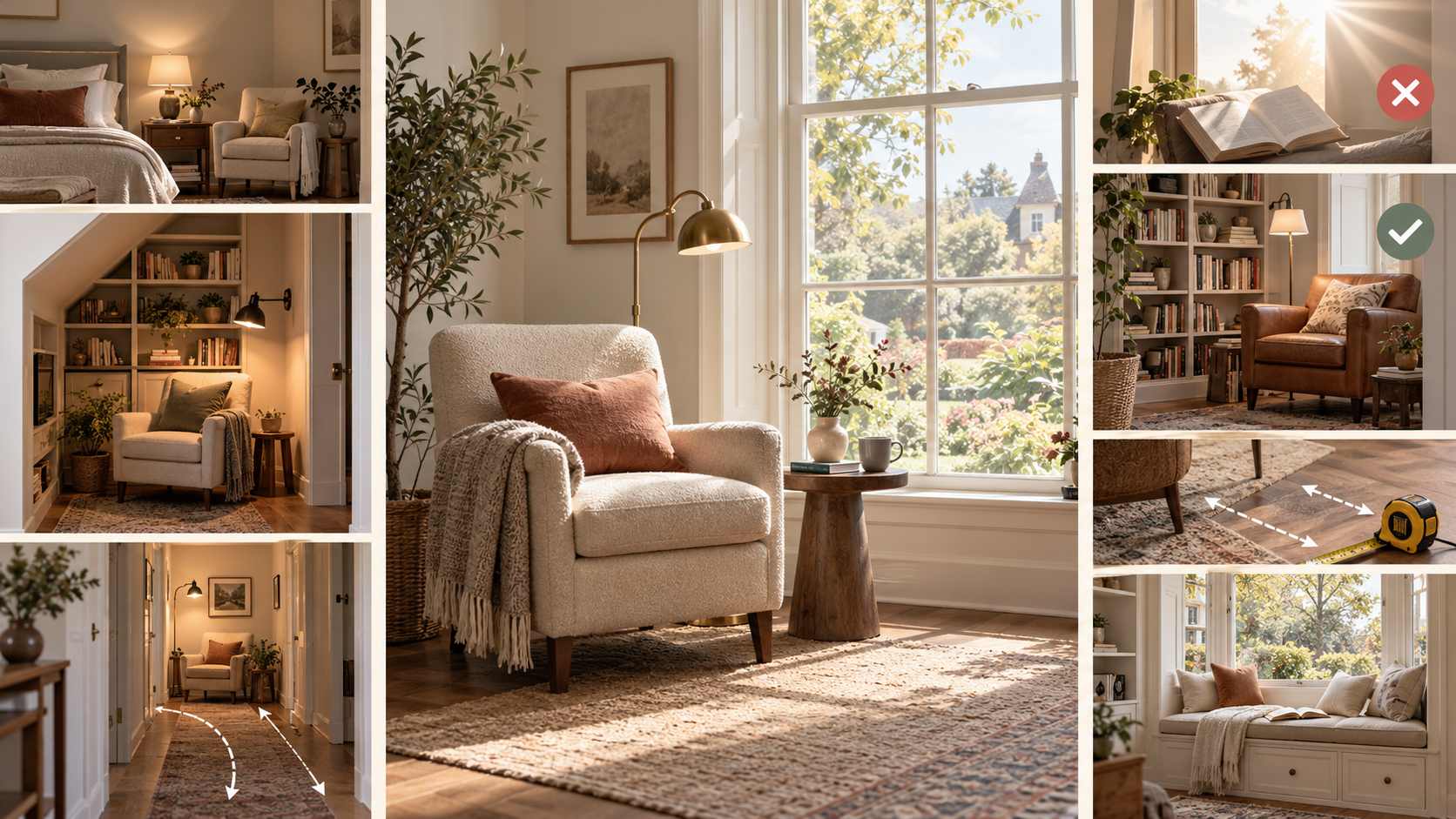
A window is a natural starting point. Daylight makes reading pleasant, and a view of the garden or street gives your eyes somewhere to rest between chapters.
But not every window is suitable. A south-facing window can bring too much heat during summer, and direct sunlight falling onto white pages can create uncomfortable glare.
Try placing a chair slightly to one side of the window rather than directly in front of it. You will still receive daylight without sitting in the brightest part of the room.
- A bedroom corner: Suitable for evening reading when the living room is busy.
- An unused alcove: Built-in shelves can make use of awkward wall space.
- The end of a hallway: A compact chair and wall lamp may fit without blocking movement.
- Beside a living room bookshelf: Books and seating stay together without creating another furniture area.
- A wide window recess: A fitted seat can work if the structure safely supports the intended load.
Measure the space before moving furniture. Leave clear access to doors, windows and walking routes, especially in narrow rooms.
Choose a Reading Chair You Can Sit in for an Hour
A chair can look beautiful in photographs and still become uncomfortable after twenty minutes.
Seat depth is particularly important. If the chair is too deep, you may need extra cushions to support your lower back. If it is too shallow, your thighs may not have enough support.
If you often spend long periods with a book, understanding how many pages you can read in an hour can also help you plan realistic reading sessions.
When trying chairs, sit with your feet resting comfortably on the floor. Your back should reach the backrest without forcing you into an awkward position.
Armrests are useful because they support your elbows when holding a heavy hardcover book. A slightly reclined backrest can be comfortable, but a chair that leans too far backward may make reading difficult.
Consider the following options.
| Chair Type | Best For | What to Check |
| Upholstered armchair | Long reading sessions | Back support and seat depth |
| Wingback chair | Traditional reading corners | Head support and overall size |
| Compact lounge chair | Small bedrooms and apartments | Comfort without extra cushions |
| Recliner | Readers who prefer changing positions | Space required when fully extended |
| Window bench | Alcoves and built-in seating | Structural support and cushion comfort |
A footstool can make a simple armchair more comfortable. Choose one that fits beneath the chair or moves easily when you need more floor space.
If buying secondhand, inspect the frame and seat cushions before purchasing. A sturdy older chair with fresh upholstery may be more comfortable than an inexpensive new one.
Install Bookshelves That Fit Your Collection
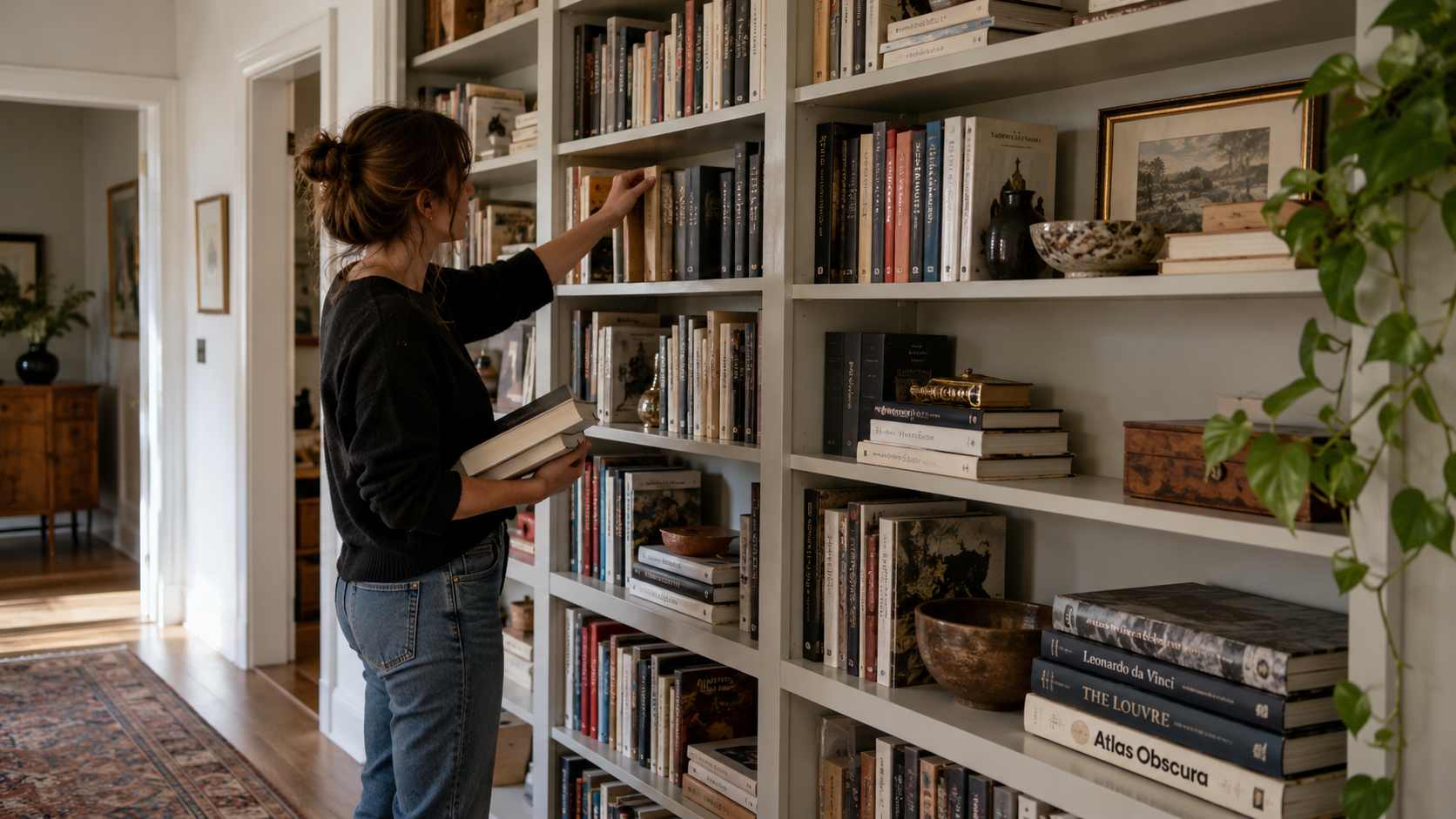
Before buying shelves, look at the books you actually own. A collection of paperback novels needs less depth than one filled with art books, large dictionaries and illustrated hardcovers.
For most standard novels, shelves around 8 to 10 inches deep are sufficient. Larger books may need 12 inches or more.
Measure your tallest books before choosing the space between shelves. Adjustable shelving is useful because your collection will change over time.
Keep books you are currently reading at a comfortable height. Heavy volumes belong on lower shelves, where they are easier to lift and less likely to create stability problems.
Bookcases should be secured to the wall using suitable anti-tip hardware. Tall, freestanding shelves can tip forward, particularly if children climb them or someone pulls on the upper shelves.
For narrow spaces, a wall-mounted shelf above a small cabinet can provide storage without occupying the entire floor.
Do not fill every shelf immediately. Leaving some room for future books is easier than rearranging the entire collection each time you bring home another novel.
If you are looking for shorter additions to your collection, consider novels under 200 pages that you can enjoy over a weekend.
Get the Reading Light Right
A decorative lamp may create pleasant evening lighting without providing enough light to read comfortably.
Position a reading lamp so the light reaches the pages rather than shining directly into your eyes. A floor lamp with an adjustable arm works well beside an armchair.
If you hold books in your lap, the lamp should illuminate that area rather than the top of your head.
Lighting guidance for libraries and study areas identifies 500 lux as a standard illumination level for reading areas. At home, the amount of light you need will also depend on the print size, your eyesight and the surrounding daylight.
A dimmable lamp makes adjustment easier. You may want brighter light for a book with small print and softer lighting when reading a large-format novel.
Choose a warm white bulb for comfortable evening use. Avoid placing bare bulbs where they shine into your eyes or produce strong reflections on glossy pages.
Wall-mounted reading lamps save space when there is no room for a floor lamp. They are particularly useful beside window seats and in narrow bedroom corners.
Add a Small Table Instead of Another Piece of Storage Furniture
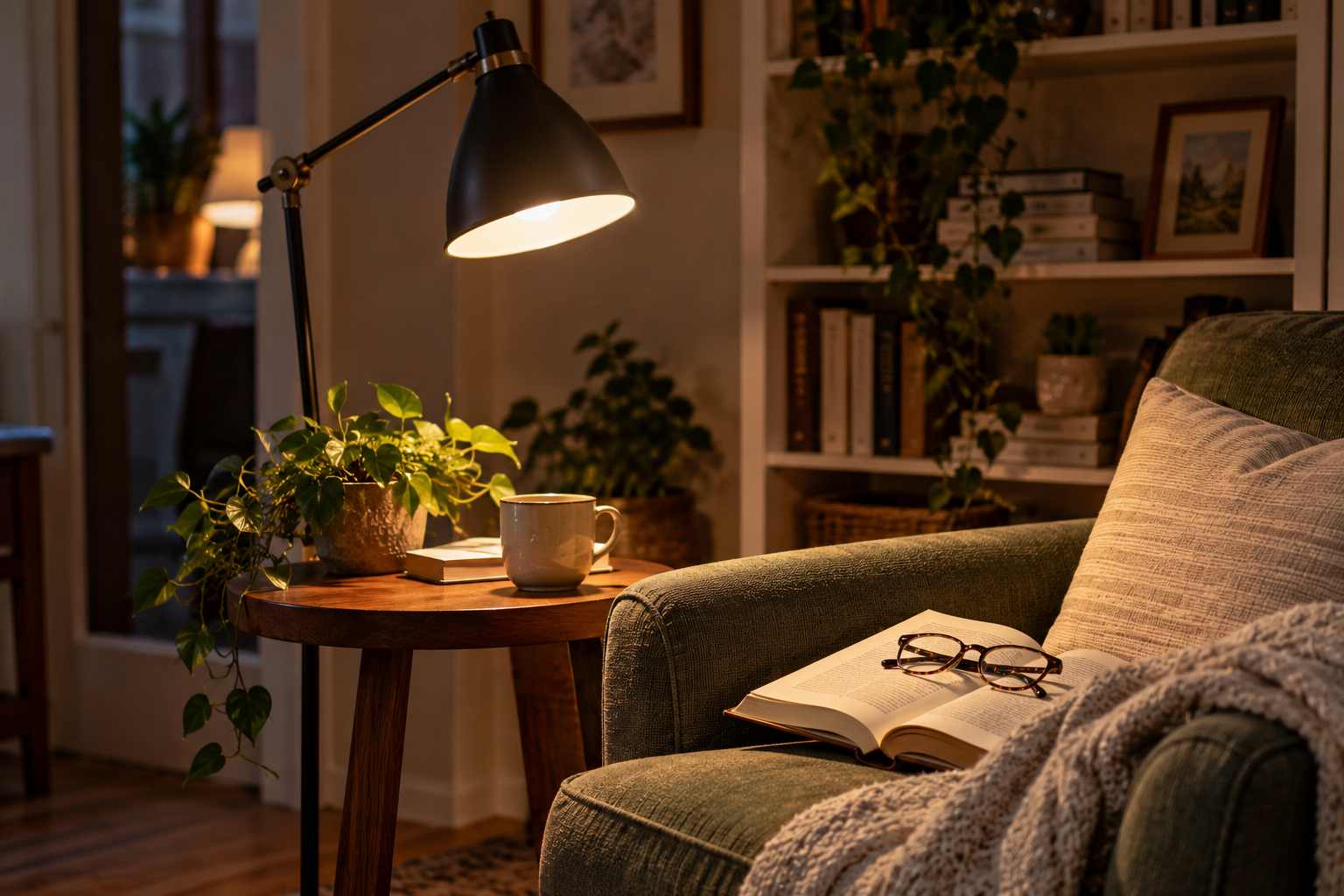
A reading corner needs somewhere to put a drink, glasses or a book you have just finished.
A small round table often works better than a large square one because it leaves more room to move around the chair.
Choose a height close to the armrest of your chair. You should be able to put down a cup without leaning forward or twisting your back.
For a particularly narrow space, a C-shaped side table can slide partly beneath the chair, bringing the surface closer to your hand.
A small drawer is useful for bookmarks, reading glasses, pens and a notebook. Keep the tabletop clear enough to hold a book and a drink without balancing them on top of each other.
Set Up a Reading Corner on a Balcony or Terrace
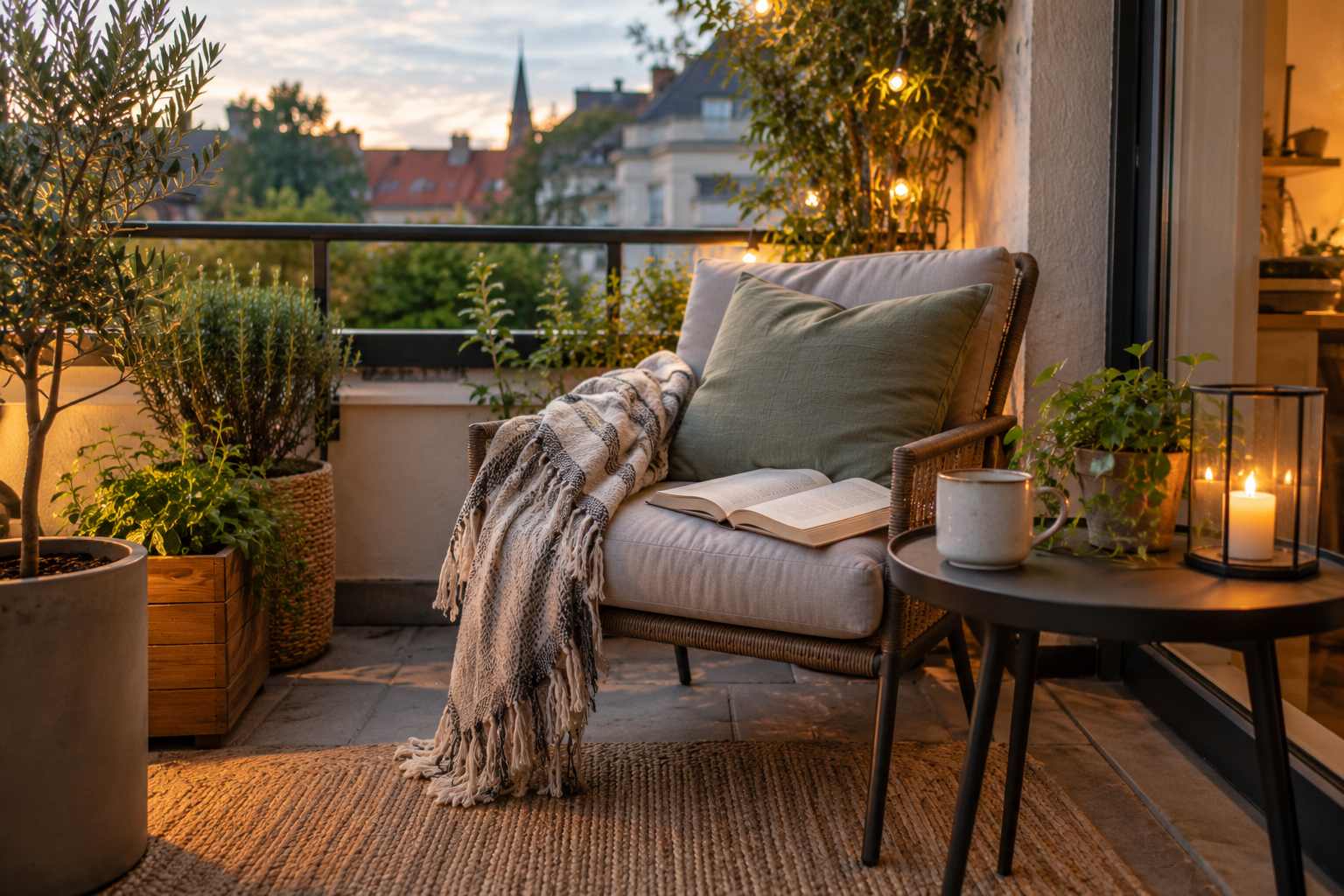
If you have a balcony or a small terrace, it can be a lovely place to read when the weather is warm. A comfortable outdoor chair, a small table and some shade are enough to make the space useful without spending much money.
Choose a chair with a supportive backrest and cushions made for outdoor use. A folding side table can hold your book and coffee without taking up much room. If the balcony receives direct afternoon sunlight, an adjustable umbrella or suitable outdoor blind can make reading more comfortable.
For an older balcony that needs renovation, replacing worn floorboards or damaged balustrades may be part of the work. Any replacement must be suitable for the structure and comply with local safety requirements.
Keep a small basket near the balcony door for your current book, reading glasses and blanket. Bring everything inside after reading so books and fabrics stay protected from rain and moisture.
Use Curtains, Rugs and Cushions to Make the Corner More Comfortable
Hard floors, bare walls and an upholstered chair can still leave a room feeling unfinished.
A small rug helps define the seating area and provides a warmer surface beneath your feet. Make sure it lies flat and does not create a trip hazard.
Choose a rug that fits the space rather than one that extends awkwardly into a doorway or hallway.
Curtains or blinds are useful when sunlight shines directly onto the pages. They also help reduce glare during bright afternoons.
For cushions, start with one that supports your lower back. Add a small blanket if you enjoy reading during colder evenings.
Avoid piling decorative pillows onto the chair. If you have to move four cushions before sitting down, the furniture is no longer arranged for reading.
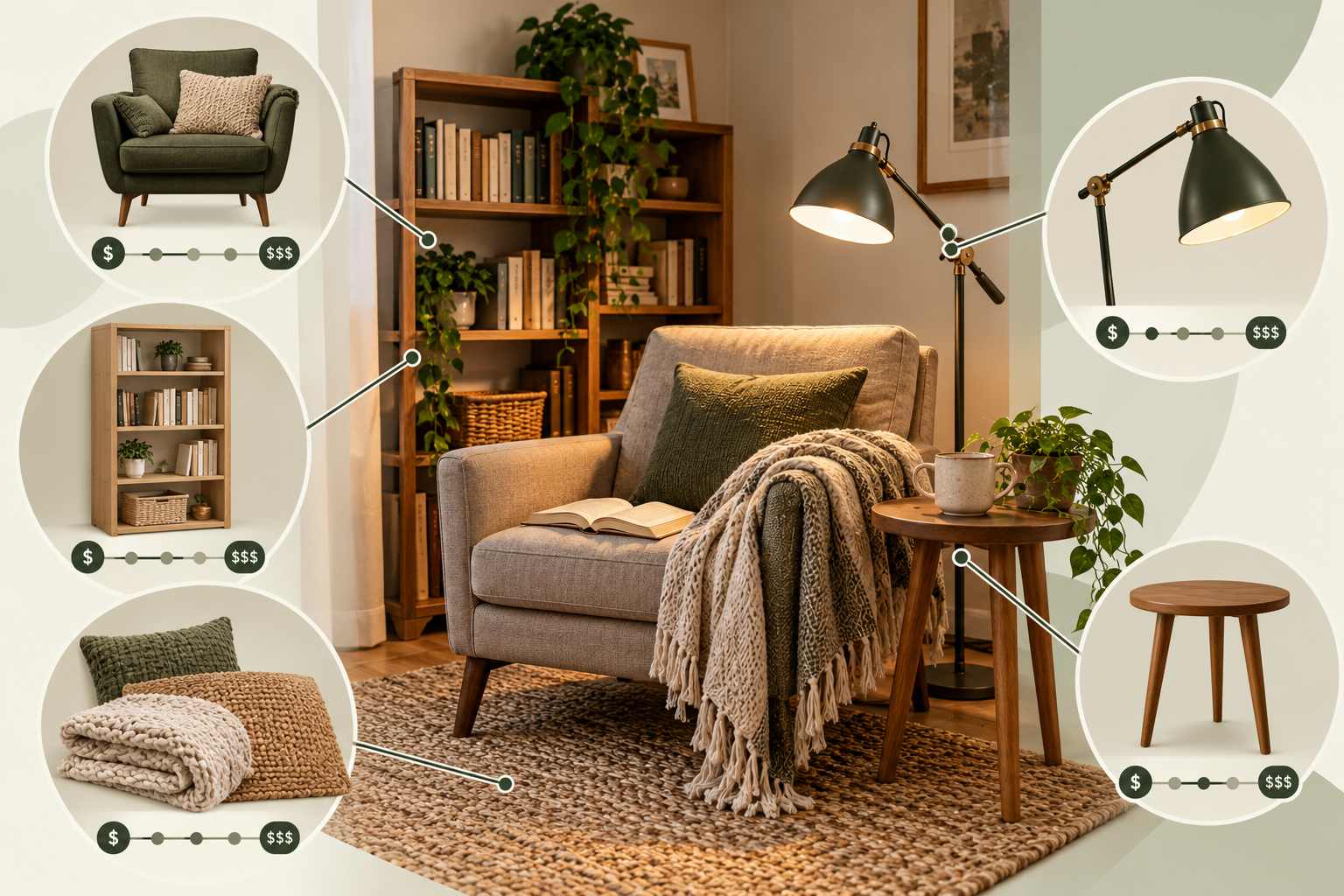
How Much Does It Cost to Create a Reading Corner?
The cost depends mainly on the chair and shelving. You may already own furniture that works with a few small changes.
| Item | Budget Range |
| Secondhand armchair | $50 to $200 |
| New comfortable armchair | $200 to $600+ |
| Small bookshelf | $40 to $150 |
| Adjustable reading lamp | $25 to $100 |
| Side table | $20 to $80 |
| Rug, cushion and blanket | $50 to $150 |
Illustrative shopping budgets, not verified current retailer prices. Delivery, installation and custom furniture can increase the cost.
A reading corner can cost less than $150 if you reuse an existing chair, buy a secondhand shelf and add a suitable lamp.
Spend more on the chair if you expect to read for long periods. An attractive lamp or expensive rug will not compensate for seating that hurts your back.
Keep the Reading Corner Easy to Use
Once the furniture is in place, sit down with a book and see how everything feels.
Can you reach the lamp switch without standing up? Does the chair support your back? Is the light bright enough for small print? Can you put down a mug without stretching?
Move the furniture until those small annoyances disappear. The first arrangement may look attractive without being comfortable. Keep the nearby shelf for books, reading glasses and a notebook for tracking your reading.
Avoid letting the chair become somewhere to leave laundry, bags or unopened mail.
A comfortable reading corner can be nothing more than a secondhand armchair, a narrow shelf and a properly placed lamp. Once you have somewhere pleasant to sit, picking up a book becomes a much easier part of the day.